Address
Vadodara, Gujarat
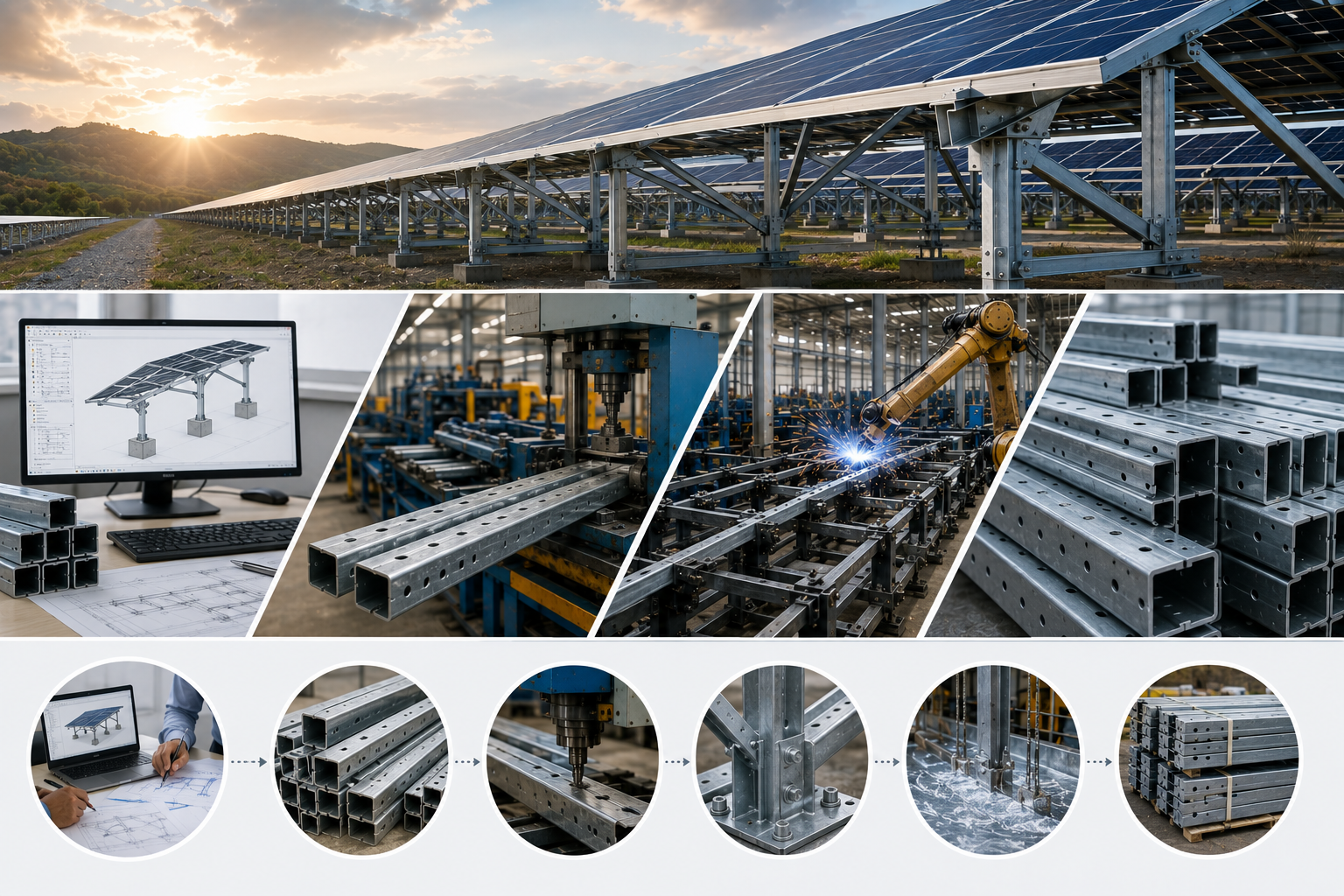
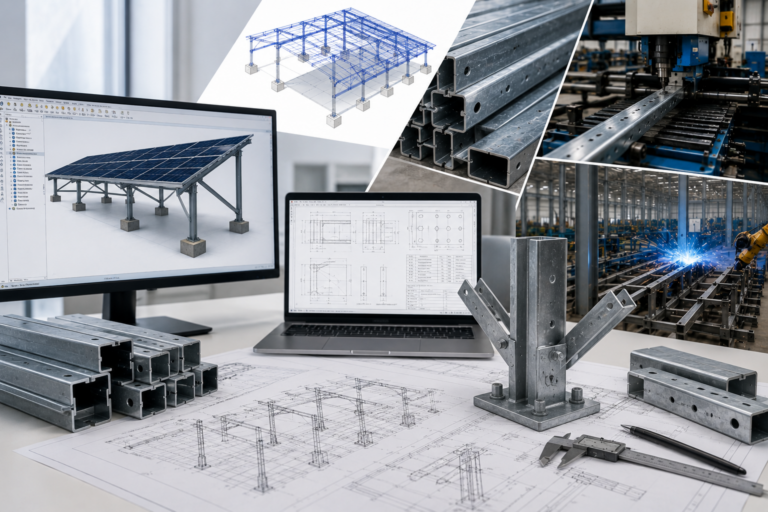
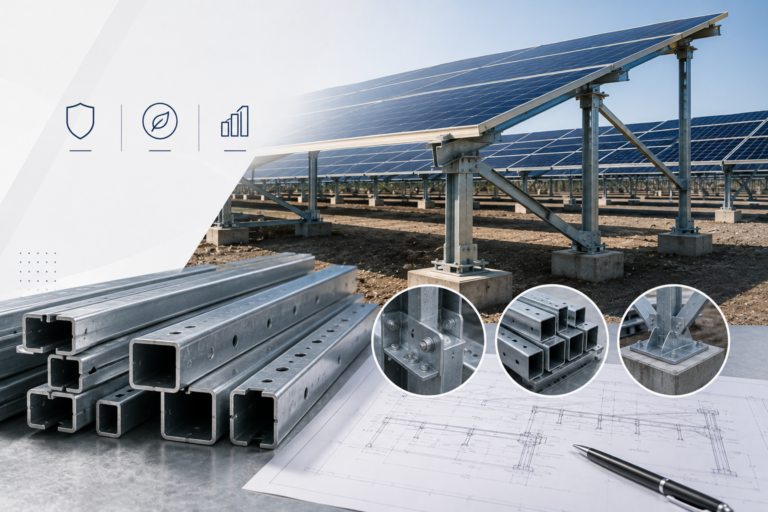
Reliable solar infrastructure depends on more than the performance of the solar modules themselves. The structural system supporting those modules needs to be designed, manufactured, protected, and delivered with equal attention to engineering and quality. From structural detailing to fabrication and final inspection, each stage contributes to the reliability of the complete solar mounting system.
Engineering provides the foundation for developing an appropriate structural solution. Project requirements, loading conditions, wind conditions, structural configuration, material selection, and site considerations all need to be understood before the final components are defined. A site-specific approach helps ensure that the structural system is developed according to the actual requirements of the application.
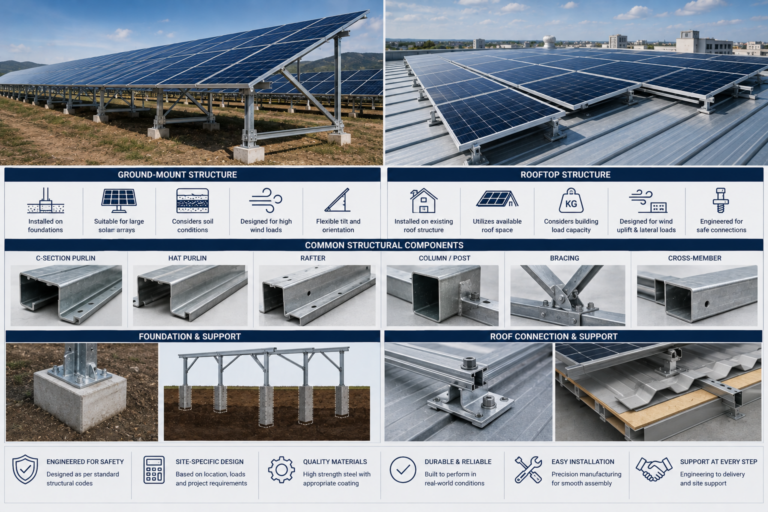
The structural system itself consists of multiple components working together. C-section purlins, rafters, hat purlins, columns and posts, bracing, and cross-members each have a defined role within the structure. Their dimensions, thicknesses, connections, and arrangement need to work together to transfer loads effectively and provide the required stability.
Manufacturing quality is equally important. Engineering information needs to be translated accurately into physical components through processes such as roll forming, cutting, CNC punching, welding, assembly, and surface protection. Maintaining consistency during these processes helps ensure that manufactured members correspond with the intended design.
Quality assurance provides another important layer of control. Dimensional checks, coating thickness checks, material testing, hardness and bend testing, and material traceability can help verify the quality and consistency of structural components. ARKION’s quality information also identifies third-party inspection as available on request.
Surface protection contributes to the long-term durability of structural steel used in outdoor solar applications. ARKION identifies pre-galvanized steel and hot-dip galvanizing among its coating options. Appropriate surface protection, combined with controlled manufacturing and quality checks, supports the durability requirements of structural components exposed to outdoor conditions.
The connection between engineering and quality becomes particularly important when projects involve site-specific requirements. Wind conditions, module configuration, tilt angle, foundation arrangements, and structural loads can vary from one installation to another. Engineering calculations and detailed drawings help establish the requirements, while manufacturing and quality processes help maintain those requirements through production.
ARKION brings engineering and production capabilities together with quality assurance, research and development, OEM support, and project-related services. This integrated approach supports the development and delivery of structural solutions with attention to practical requirements, manufacturing consistency, and long-term performance.
Building reliable solar infrastructure requires every stage of the process to work together. Engineering establishes the structural requirements, manufacturing turns those requirements into physical components, quality assurance verifies consistency, and appropriate surface protection supports durability. When these elements are coordinated, they create a stronger foundation for dependable solar infrastructure.
For ARKION, the focus remains on combining engineering, manufacturing, and quality to develop structural solutions that are practical, precise, and built to support the long-term requirements of solar infrastructure.