Address
Vadodara, Gujarat
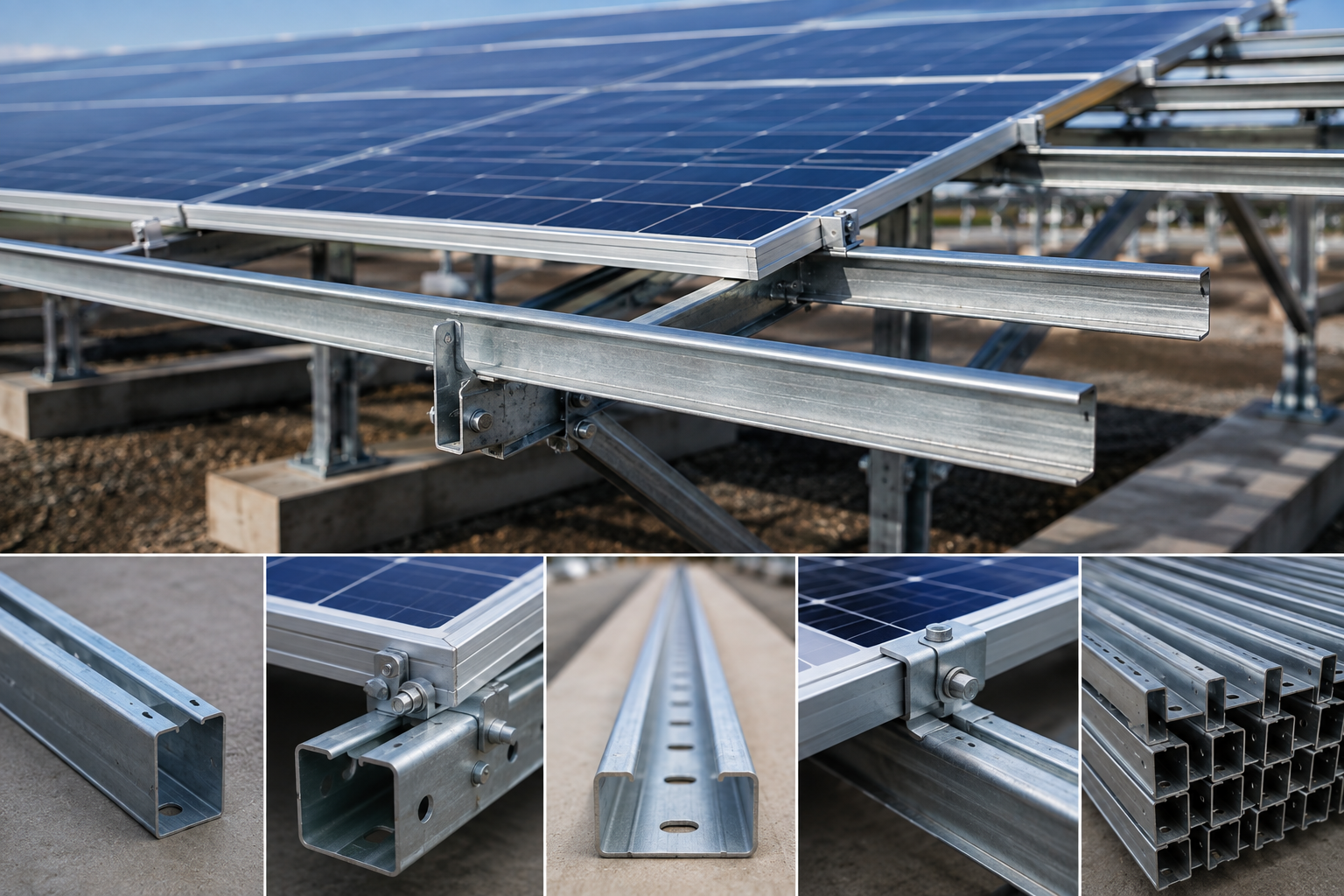
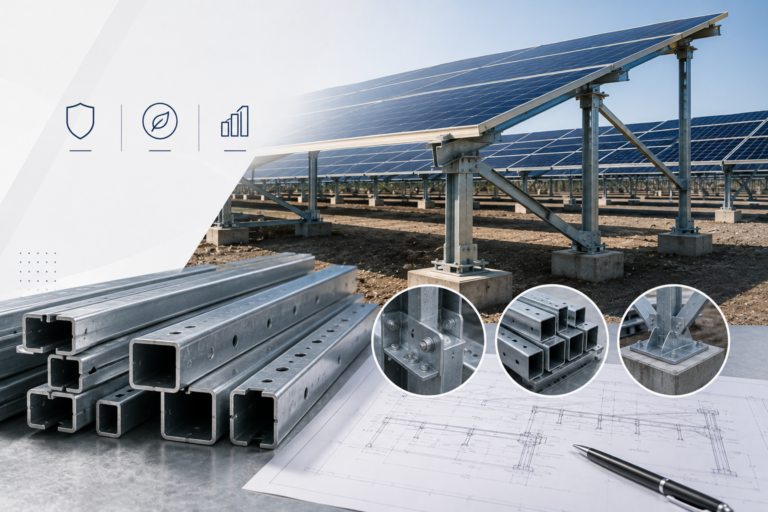
C-section purlins are an important part of solar structural systems, providing support for solar modules while transferring structural loads to the primary members of the mounting structure. Their section geometry, material thickness, dimensions, spacing, and connection arrangement are selected according to the requirements of the specific solar installation.
In a typical solar mounting system, C-section purlins work as supporting members positioned across the structural framework. They carry the load from the solar modules and transfer it through the supporting members and ultimately towards the foundation. Their role makes accurate design and fabrication important for maintaining structural stability and ensuring that the complete system works as intended.
The selection of a C-section purlin depends on several project considerations. These can include the required span, expected loads, module configuration, wind conditions, structural arrangement, and applicable design requirements. Different projects may require different section dimensions and material thicknesses, which is why site-specific engineering is important when determining the appropriate purlin configuration.
C-section purlins can also contribute to material-efficient structural design. When the section dimensions and thickness are appropriately selected for the expected loading conditions, the structural system can achieve the required performance without unnecessary material usage. This balance between strength, weight, fabrication, and installation is an important consideration in solar structural engineering.
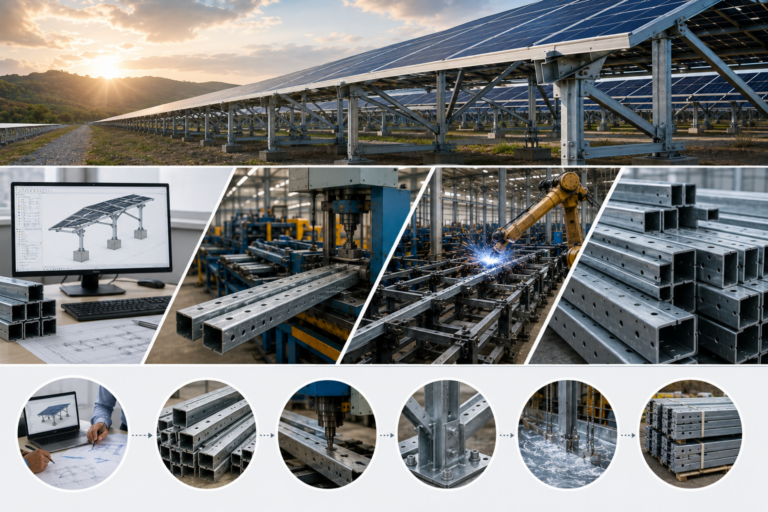
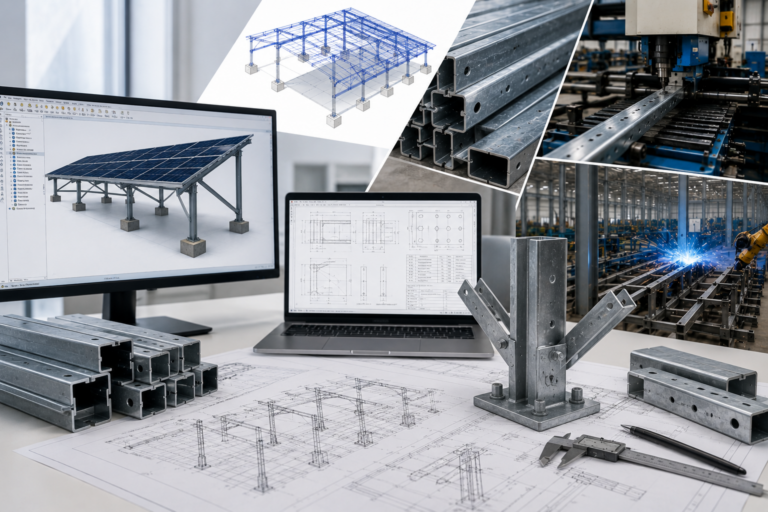
Manufacturing accuracy is equally important. C-section purlins are commonly produced through roll forming, where steel coils are shaped into consistent structural profiles. Cutting and punching operations can then create the required lengths, holes, and connection points. Accurate manufacturing helps ensure that the finished members correspond with the engineering drawings and can be assembled efficiently during installation.
Surface protection is another consideration for structural steel used in outdoor solar applications. Depending on project requirements, steel members may use pre-galvanized material or hot-dip galvanizing. Proper surface protection helps support long-term durability when the structure is exposed to outdoor environmental conditions.
At ARKION, C-section purlins form part of a wider structural component system that includes rafters, hat purlins, columns and posts, bracing and cross-members, and associated hardware. The components are considered as part of an integrated structural system rather than as isolated products. Engineering, manufacturing, quality control, and project requirements are brought together to support practical and reliable solar structural solutions.
The effectiveness of a C-section purlin ultimately depends on more than the profile itself. Correct engineering, material selection, dimensions, connection details, manufacturing tolerances, and surface protection all contribute to its performance within the complete solar structure. When these factors are properly coordinated, C-section purlins can provide a dependable and efficient supporting system for solar installations.