Address
Vadodara, Gujarat

Solar mounting structures are exposed to changing environmental conditions throughout their service life, making site-specific engineering an important part of structural design. Wind conditions, site characteristics, loading requirements, module configuration, and foundation arrangements all influence how a solar structure should be designed. A structural system that works for one location may require different sections, connections, or foundation arrangements for another.
Wind is one of the key considerations in solar structural engineering. Solar modules and their supporting framework can experience wind uplift and lateral forces depending on the site’s location, exposure, and structural configuration. For this reason, wind-zone analysis and structural calculations need to be considered when determining the appropriate sections, spacing, connections, and supporting arrangements for a project.
Site conditions also influence the structural design. Ground-mounted and rooftop solar systems have different structural requirements, and the available foundation or supporting arrangement needs to be considered during engineering. For ground-mounted systems, soil conditions and foundation requirements can influence the design of columns, posts, and connections. Rooftop applications require consideration of the existing building structure and the way the solar system will be supported.
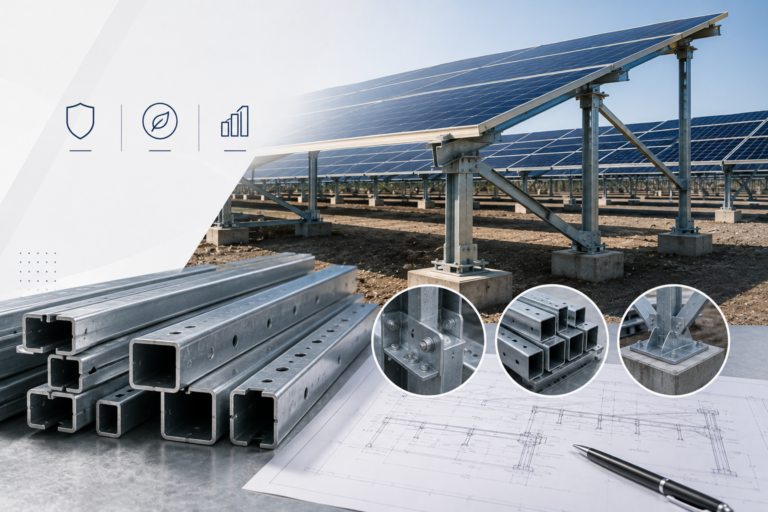
The structural configuration also depends on the solar module arrangement and required tilt. Purlins, rafters, columns, posts, bracing, and cross-members must work together as one structural system. The dimensions and thicknesses of these members are selected according to the expected loads and project requirements rather than applying one standard configuration to every site.
Material selection is another important consideration. Steel grade, section geometry, thickness, coating, and connection details all contribute to the overall performance of the structure. Selecting the right combination helps achieve the required structural performance while maintaining practical fabrication and installation requirements.
According to ARKION’s technical information, structural solutions can be designed for wind conditions of up to 180 km/h, with site-specific design based on IS 875. Fixed tilt configurations are indicated in the range of 10°–25°, with custom requirements considered where applicable. Final structural sections, coating requirements, and foundation arrangements should be confirmed according to the specific project and site conditions.
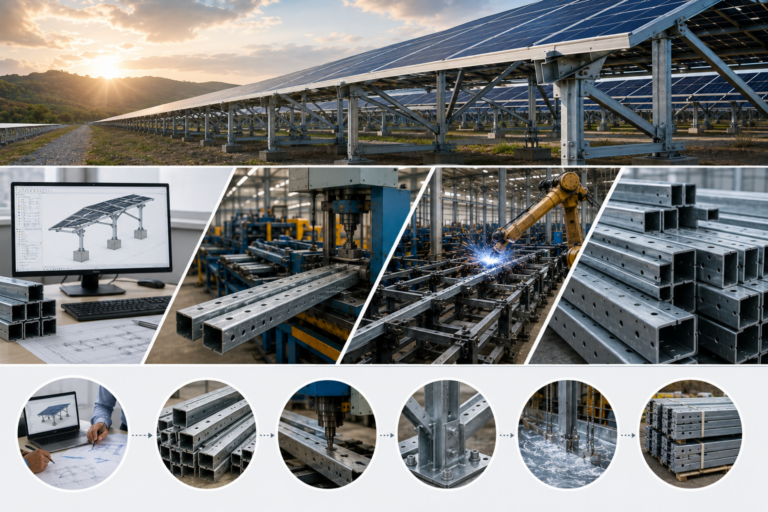
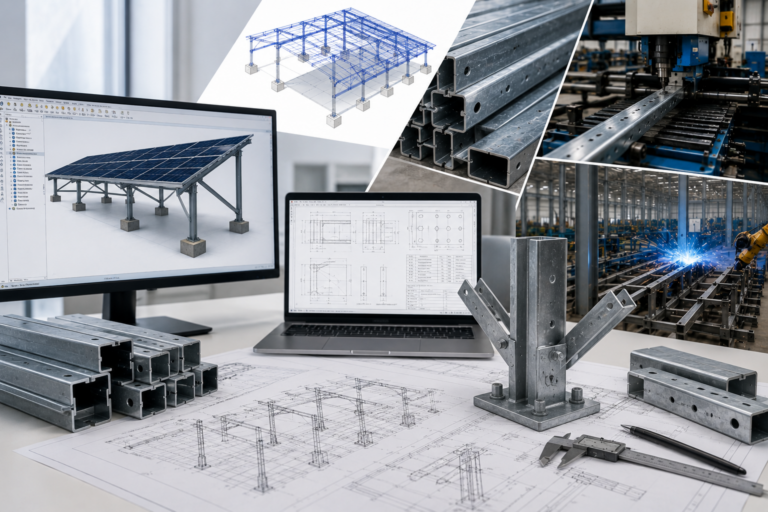
Engineering and detailing therefore play an important role before manufacturing begins. Load calculations, wind-zone analysis, and shop drawings help translate site requirements into practical structural components. This engineering information then guides manufacturing, fabrication, quality control, and installation.
At ARKION, the approach combines engineering and detailing with manufacturing, galvanizing, quality assurance, and site support. Considering these stages together helps create structural solutions that are practical to manufacture, efficient to install, and suited to the conditions of the project.
Good solar structural design begins with understanding the site. By considering wind, loads, materials, structural configuration, foundation requirements, and applicable standards together, solar mounting structures can be developed with a stronger focus on stability, durability, and long-term performance.