Address
Vadodara, Gujarat


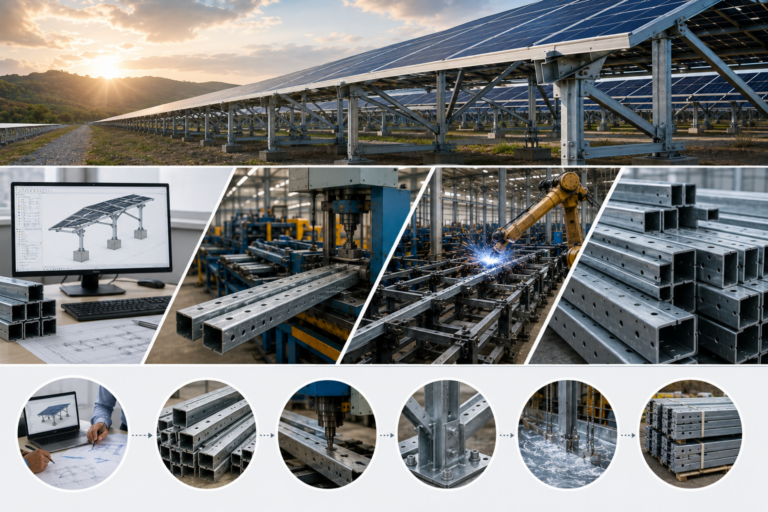
Manufacturing plays a critical role in converting an engineered solar structural design into accurate, installation-ready steel components. A well-controlled manufacturing process helps maintain consistency between engineering drawings and the final product while supporting the structural performance, quality, and reliability expected from solar infrastructure.
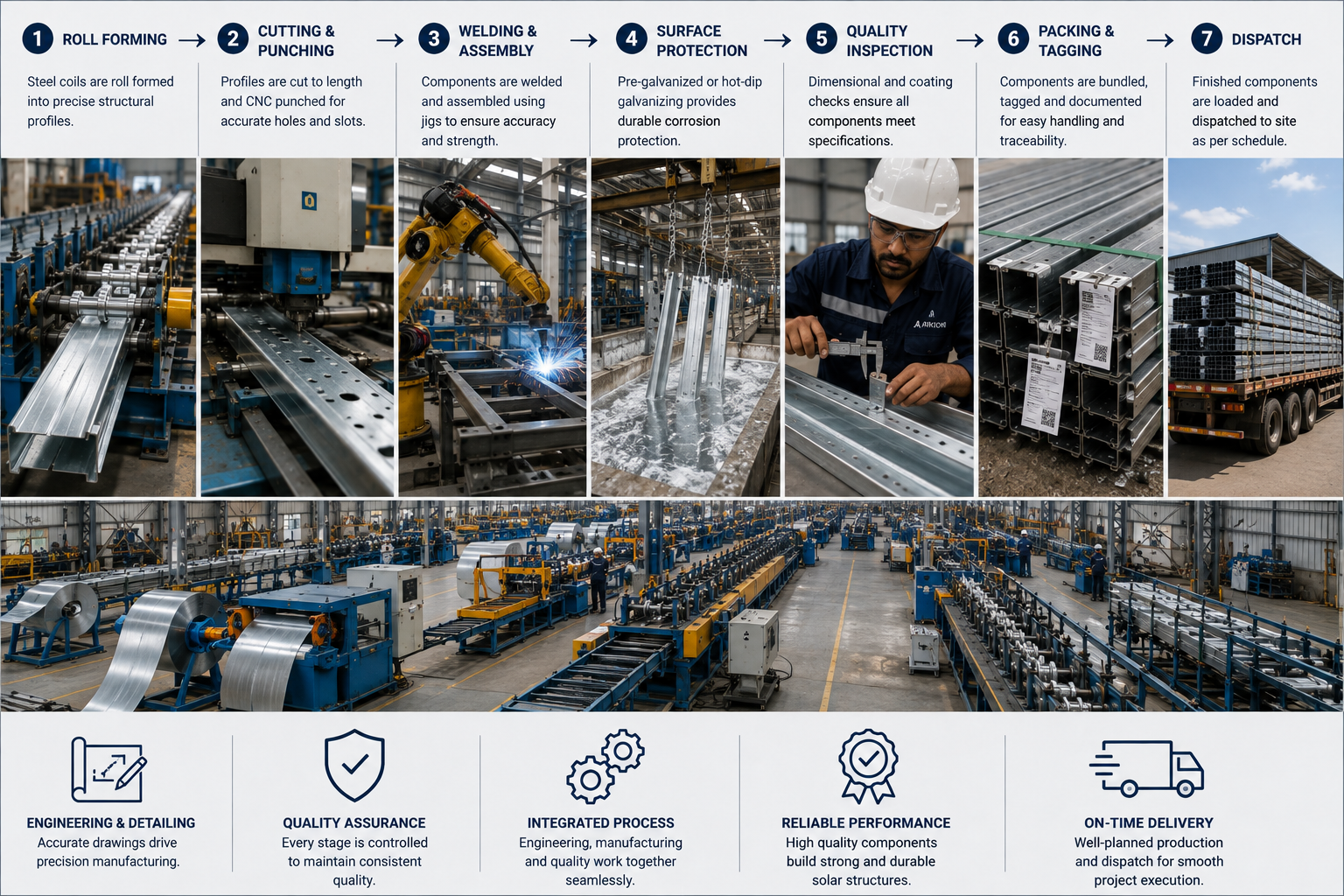
The process begins with roll forming, where steel coils are formed into the required structural profiles. Depending on the application, these profiles can include C-channels, hat purlins, and other structural sections. Consistent forming is important because the final dimensions of each member need to correspond with the requirements established during engineering and detailing.
After forming, the material moves through cutting and punching operations. Components are cut to the required lengths, while CNC punching creates the holes and slots needed for connections and assembly. Accurate positioning of these features is important because even small dimensional variations can affect how structural members connect during installation.
The next stage involves welding and assembly where required. Components are assembled using appropriate jigs and controlled processes to maintain structural integrity and dimensional consistency. Proper coordination between fabrication and engineering drawings helps ensure that the manufactured components correspond with the intended structural configuration.
Surface protection follows the fabrication process according to the specified requirements. ARKION’s technical information identifies pre-galvanized steel and hot-dip galvanizing as coating options. The selected approach depends on the project and component requirements, while coating quality and consistency remain important considerations for outdoor structural applications.
Quality inspection forms an important part of the manufacturing process. Dimensional checks, coating-related checks, and other quality controls help verify that manufactured components meet the required specifications. ARKION’s brochure also highlights testing and quality assurance as part of its manufacturing approach, supporting consistency throughout production.
Once inspection is completed, the finished components are packed, tagged, and prepared for dispatch. Proper identification and documentation help organise components for transportation and subsequent installation. For large solar projects involving multiple structural members, systematic packing and dispatch can help simplify handling and project coordination.
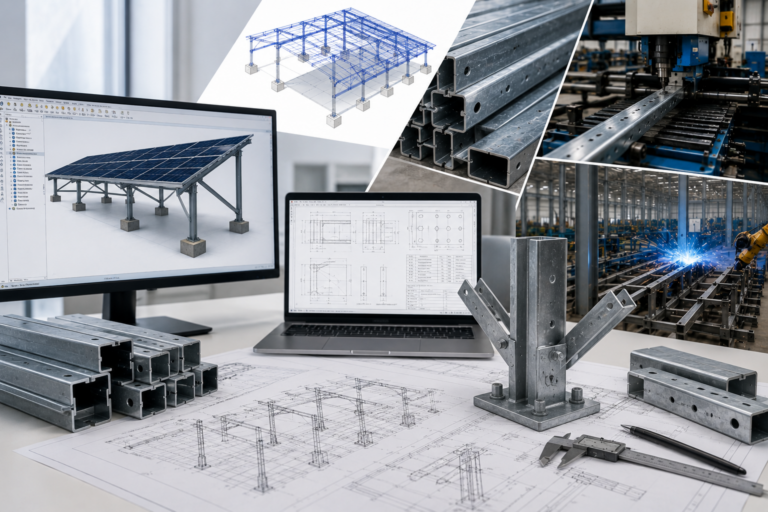
The manufacturing process is closely connected with engineering. Design and detailing provide the information required for fabrication, while manufacturing feedback can help support practical and efficient structural solutions. This connection between engineering and production is particularly important when components are produced for project-specific requirements.
At ARKION, the manufacturing approach brings together engineering, production, surface protection, quality assurance, and dispatch as connected stages of the structural production process. The objective is to maintain consistency from the initial design through to the finished component while supporting practical installation and dependable performance.
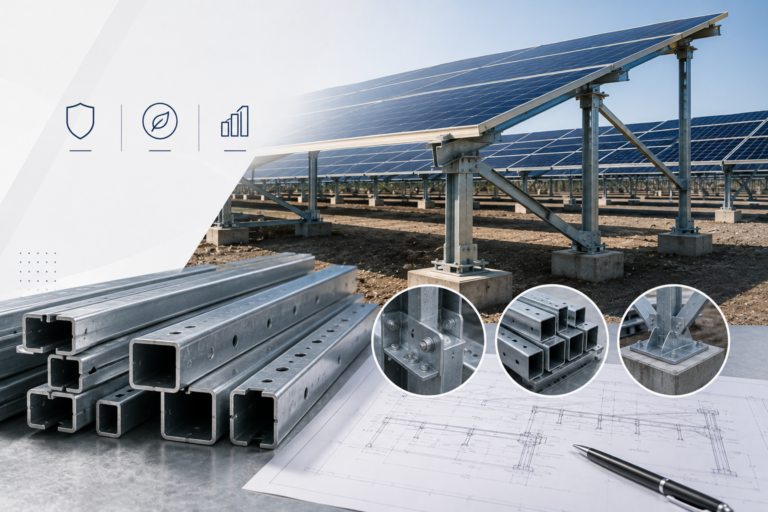
A solar structure is only as reliable as the process used to manufacture its individual components. Controlled roll forming, accurate cutting and punching, precise fabrication, appropriate surface protection, quality inspection, and organised dispatch all contribute to creating structural members that are ready to perform as part of the complete solar mounting system.