Address
Vadodara, Gujarat
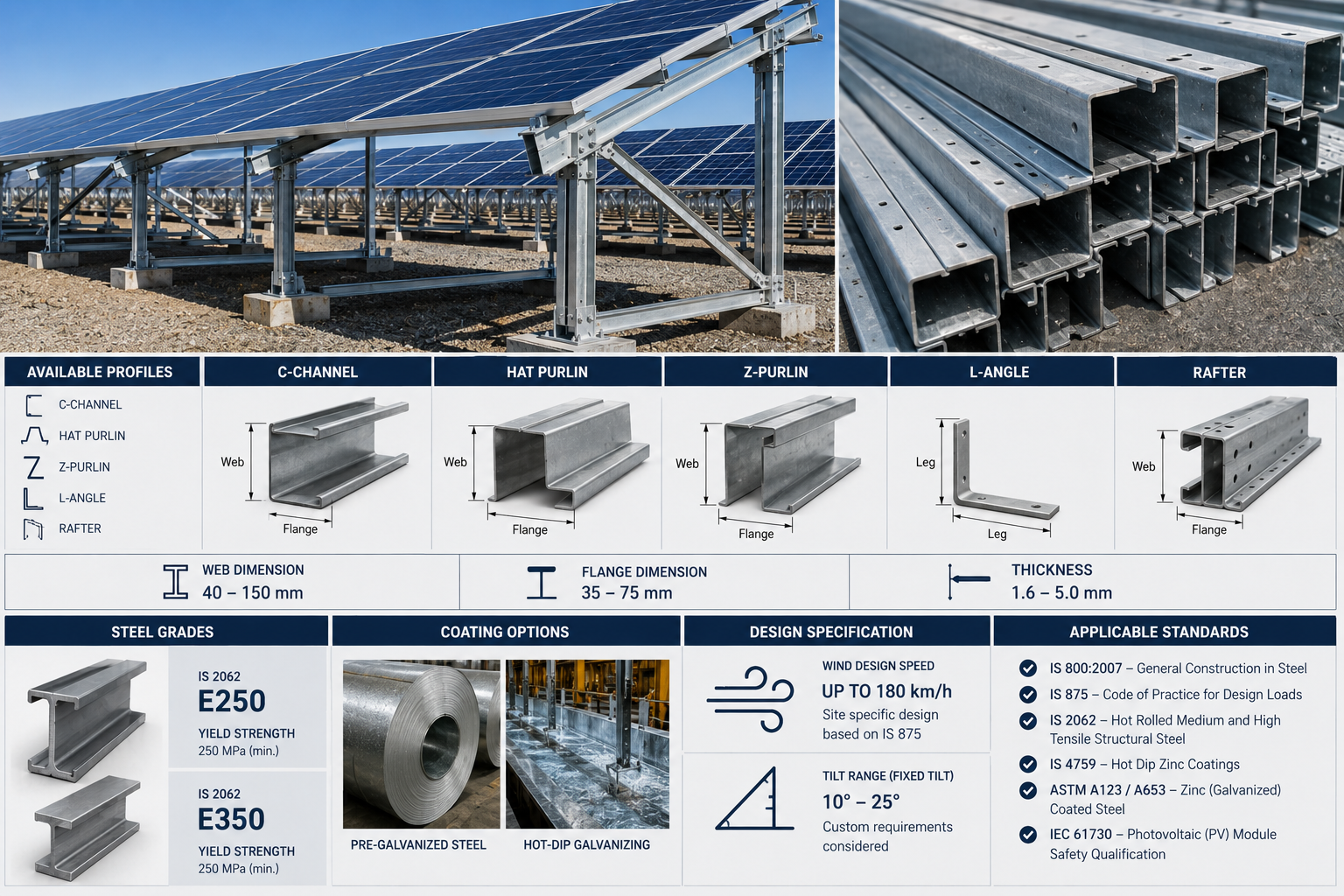
Structural steel selection plays an important role in the performance and reliability of solar mounting structures. The steel grade, section geometry, thickness, coating, and connection details all need to be considered according to the requirements of the project. Selecting appropriate materials helps create a structural system that can meet its intended loading conditions while remaining practical to manufacture and install.
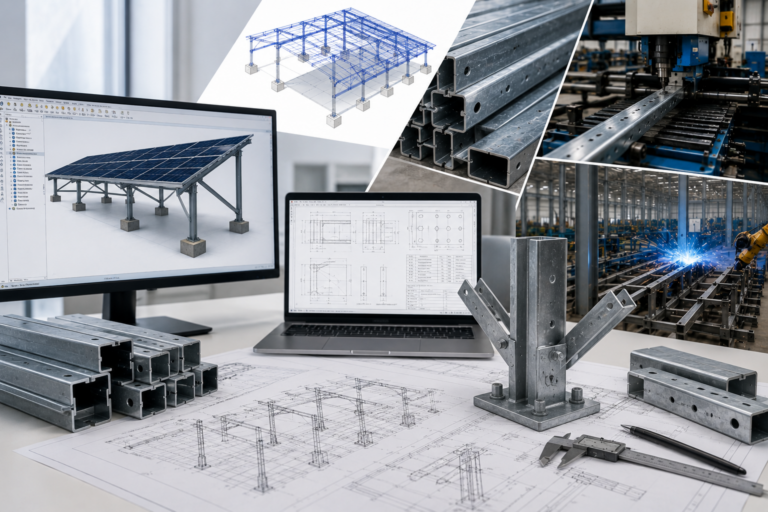
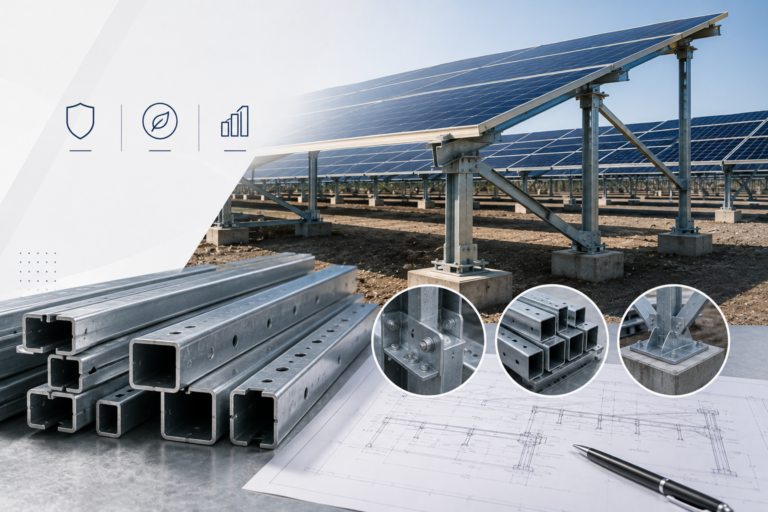
Solar mounting structures use different structural members, including C-section purlins, rafters, hat purlins, columns and posts, and bracing and cross-members. Each component performs a different function within the structural system, so its dimensions and material requirements need to be considered in relation to the loads it is expected to carry.
ARKION’s technical specifications identify IS 2062 Grade E250 and E350 among the steel grades used for its structural solutions. The available section range includes C-Channel, Hat Purlin, Z-Purlin, L-Angle, and Rafter profiles, with web dimensions ranging from 40–150 mm, flange dimensions from 35–75 mm, and material thicknesses from 1.6–5.0 mm.
The selection of section dimensions and thickness is not based only on the component name. Span, loading conditions, wind requirements, module arrangement, connection details, and site conditions all influence the final structural configuration. Site-specific engineering is therefore important when determining the appropriate section and material requirements for a solar project.
Surface protection is another important specification for structural steel used in outdoor solar applications. ARKION’s technical information identifies pre-galvanized steel and hot-dip galvanizing as coating options. The appropriate protection method depends on the component and project requirements, with coating considerations forming part of the overall structural and manufacturing process.
Design standards also provide an important framework for structural development. ARKION’s technical information references IS 800:2007, IS 875, IS 2062, IS 4759, ASTM A123 / A653, and IEC 61730 among its applicable standards. These references support considerations related to structural design, loads, steel materials, galvanizing, and solar module applications.
Wind design is another important specification when selecting structural members. ARKION’s technical information indicates wind design speeds of up to 180 km/h, with site-specific design based on IS 875. Final structural sections and foundation arrangements should be confirmed according to the actual requirements and conditions of each project.
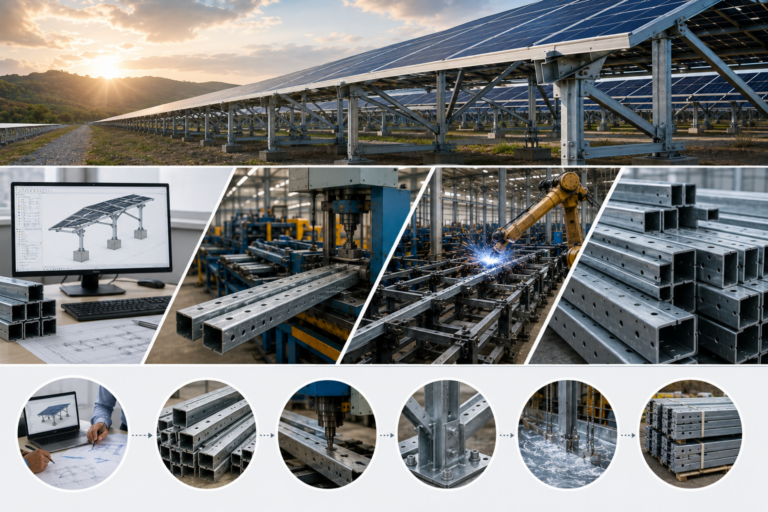
The choice of steel specification also needs to work with the manufacturing process. Roll forming, cutting, CNC punching, welding, assembly, and surface protection all require appropriate coordination between engineering and production. Accurate manufacturing helps ensure that the finished members correspond with the intended dimensions and connection details.
At ARKION, structural steel specifications are considered as part of an integrated engineering and manufacturing approach. Material grade, section profile, dimensions, thickness, coating, and applicable standards are brought together to develop structural components suited to the requirements of solar infrastructure.
The right material specification is ultimately about more than choosing a steel grade. It is about selecting the appropriate combination of material, section, dimensions, coating, design requirements, and manufacturing processes for the application. When these factors are considered together, structural steel can provide the strength, durability, and consistency required for dependable solar mounting systems.