Address
Vadodara, Gujarat


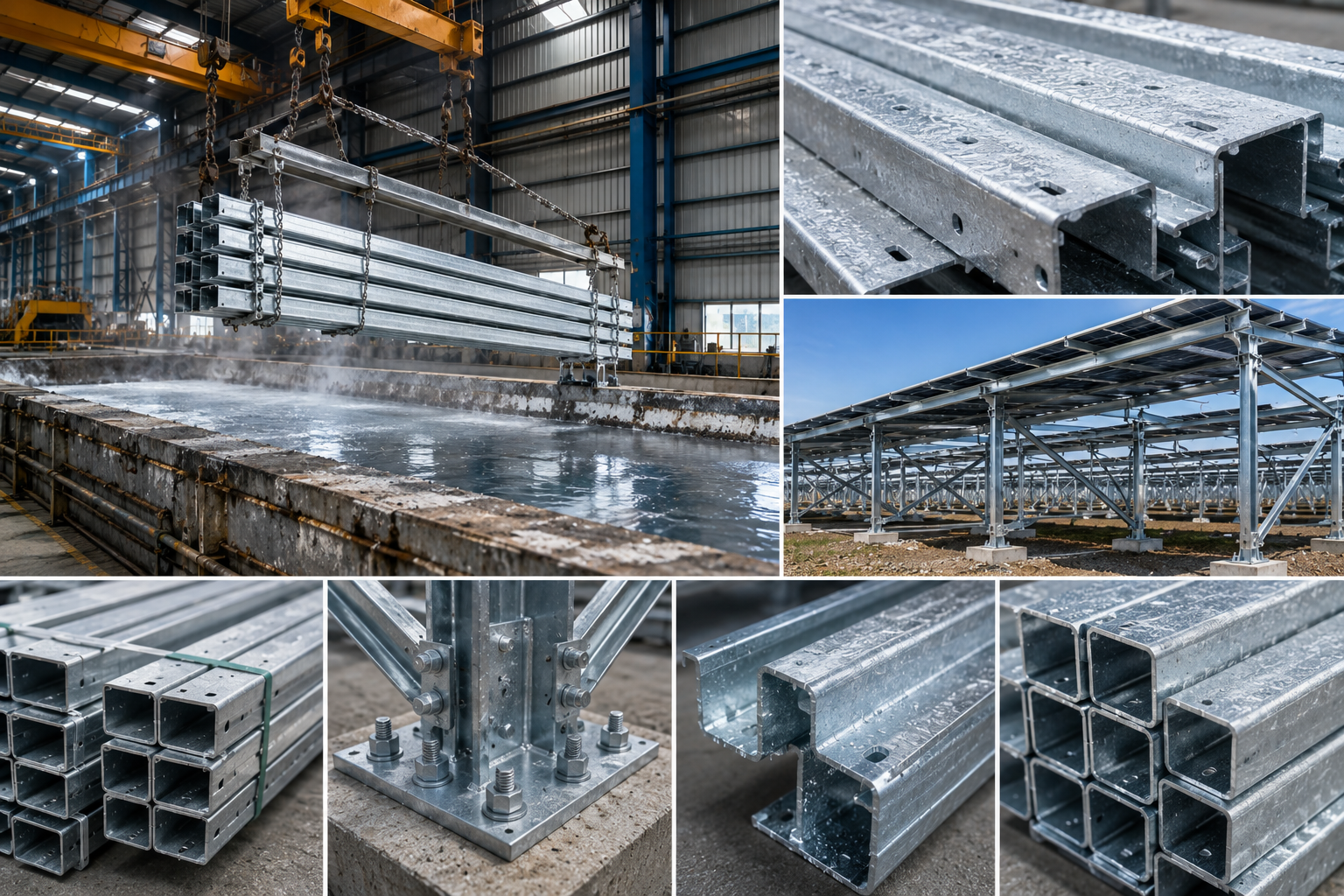
Hot-dip galvanizing is an important surface protection process for structural steel used in outdoor solar infrastructure. Solar mounting structures remain exposed to environmental conditions throughout their service life, making appropriate protection of steel components an important consideration in structural design and manufacturing. A suitable galvanizing process helps protect the steel surface and supports the long-term durability of the structural system.
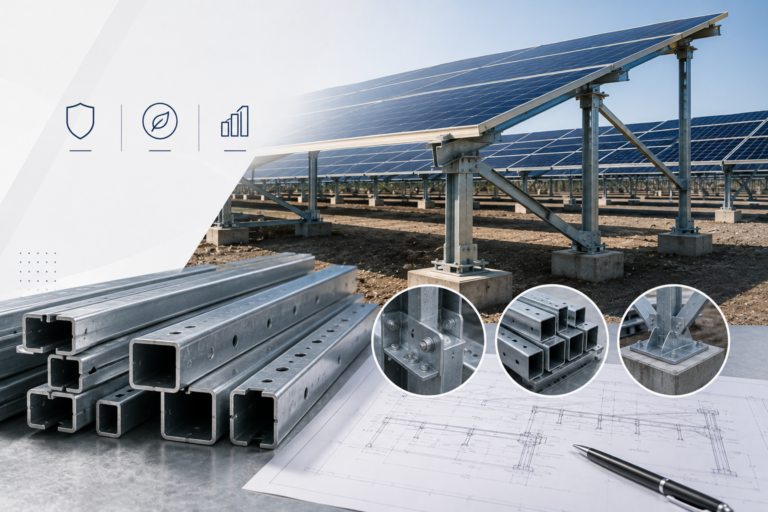
In a solar mounting structure, components such as purlins, rafters, columns, posts, bracing members, and other steel parts can be exposed to moisture and changing outdoor conditions. The choice of surface protection therefore needs to be considered alongside the structural design, material selection, manufacturing process, and intended application of the system.
Hot-dip galvanizing involves applying a protective zinc coating to steel components. The process is used to provide surface protection and improve the durability of steel when used in demanding outdoor environments. For solar structures, this can be particularly relevant because the structural members are designed for long-term outdoor use and are expected to maintain their performance over the intended service life of the installation.
The quality of the galvanized coating is an important part of the overall process. Coating thickness, surface condition, dimensional requirements, and proper inspection all need to be considered to maintain consistency. A controlled galvanizing process helps ensure that structural components receive the required level of surface protection while maintaining the dimensional and fabrication requirements established during engineering.
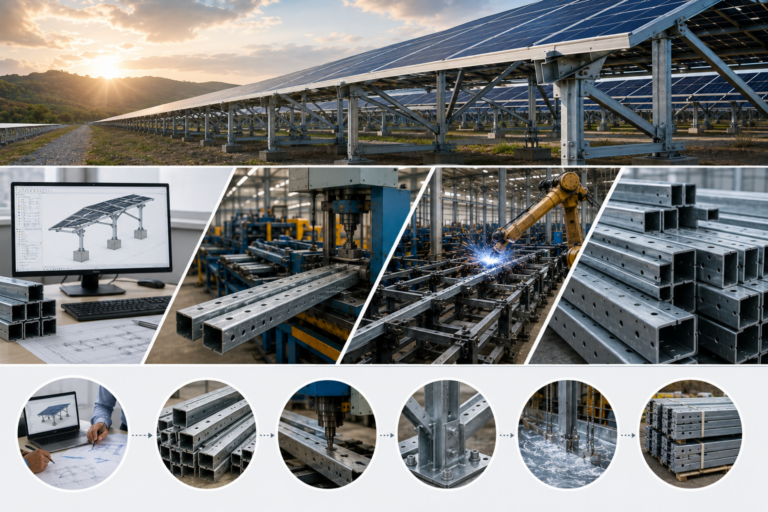
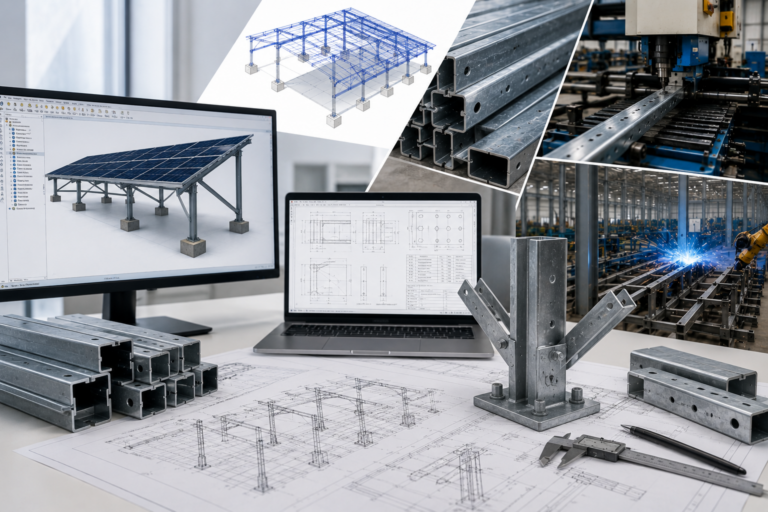
At ARKION, fabrication and galvanizing are considered as connected parts of the structural production process. Structural components are developed with attention to engineering requirements, manufacturing accuracy, and surface protection. This approach helps maintain consistency from the initial design through fabrication and final delivery.
Hot-dip galvanizing also needs to be considered during the design and fabrication stages rather than being treated as an isolated final operation. Component geometry, connection details, drainage and venting requirements, handling, and inspection can all influence the quality of the galvanizing process. Coordinating these considerations with manufacturing helps support an effective and consistent result.
For solar structural systems, durability is closely connected with material protection and manufacturing quality. Selecting an appropriate surface protection method, maintaining controlled processes, and carrying out suitable inspections can help support the long-term performance of the steel structure.
The right combination of structural engineering, accurate fabrication, appropriate galvanizing, and quality assurance creates a stronger foundation for dependable solar infrastructure. For this reason, galvanizing should be viewed as an important part of the complete structural solution rather than simply a finishing step.