Address
Vadodara, Gujarat

Quality testing is an important part of structural steel manufacturing, particularly when components are being produced for solar infrastructure where dimensional accuracy, material consistency, and surface protection can influence the performance of the completed structure. Quality should therefore be considered throughout the manufacturing process rather than only at the final inspection stage.
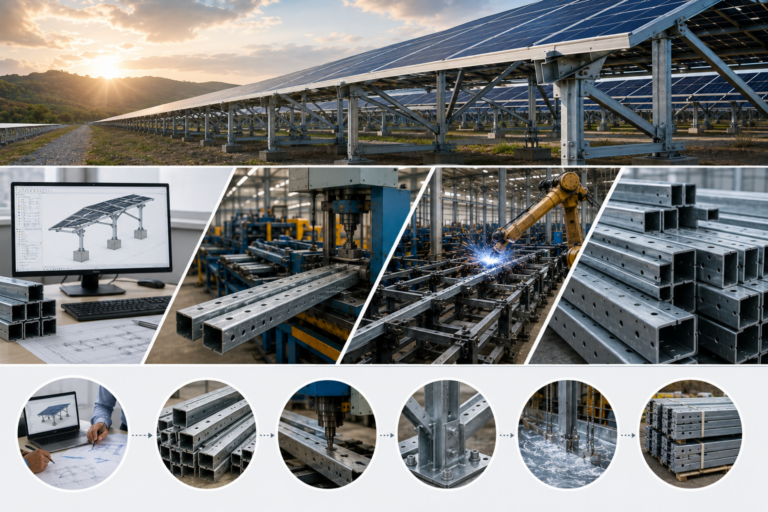
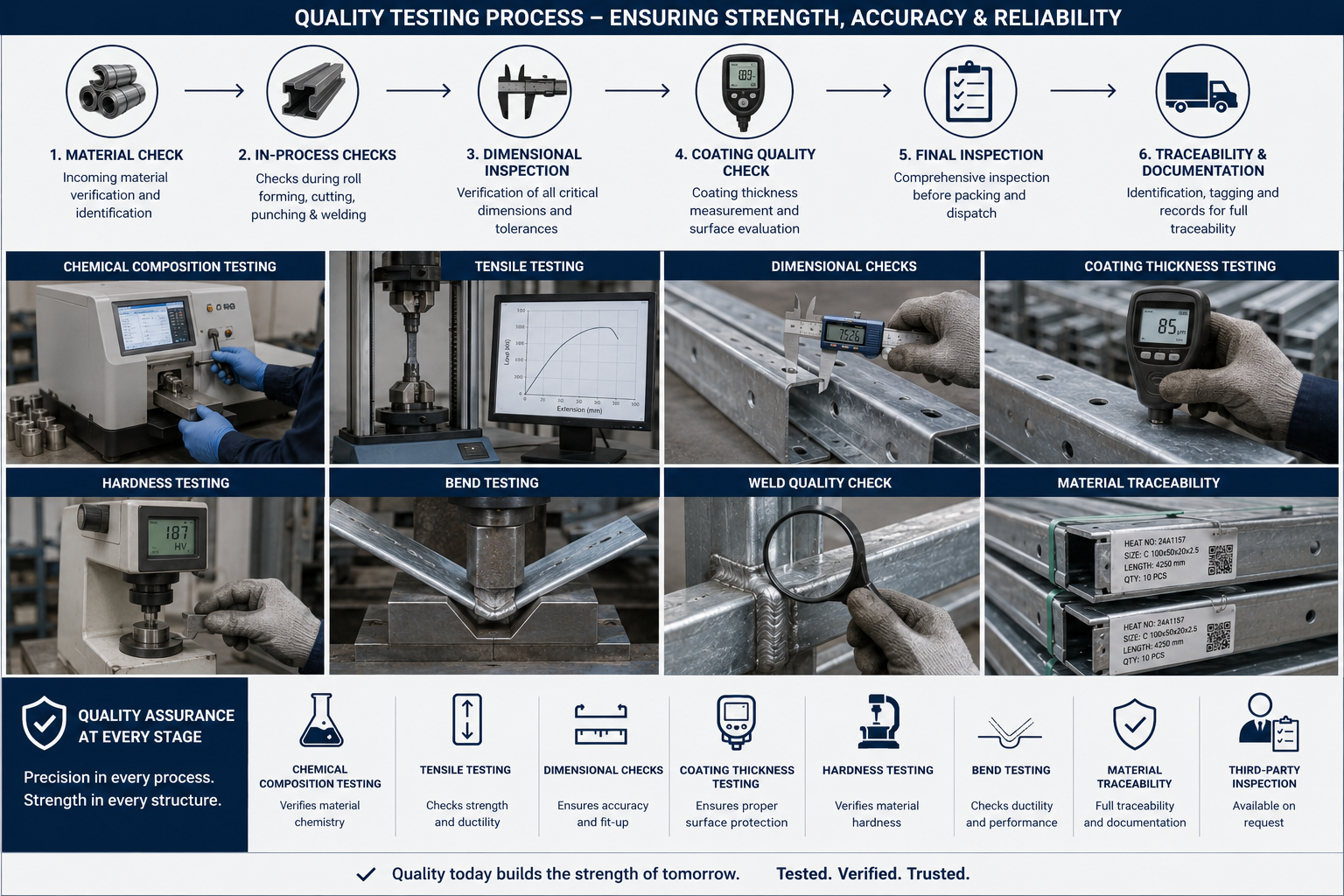
A structured quality process begins with checking the material and continues through forming, cutting, punching, welding, surface protection, and final inspection. Each stage provides an opportunity to verify that the manufactured components remain consistent with the required engineering specifications.
Material testing can help verify the properties of the steel being used for structural components. Depending on the project requirements, this can include checks related to chemical composition and tensile properties. These checks provide information about the material and help confirm that it is suitable for the intended structural application.
Dimensional inspection is another important part of structural steel quality control. Measurements of section dimensions, lengths, hole positions, thicknesses, and other relevant features help verify that components have been manufactured according to the required specifications. Accurate dimensions are particularly important for components that need to connect together during installation.
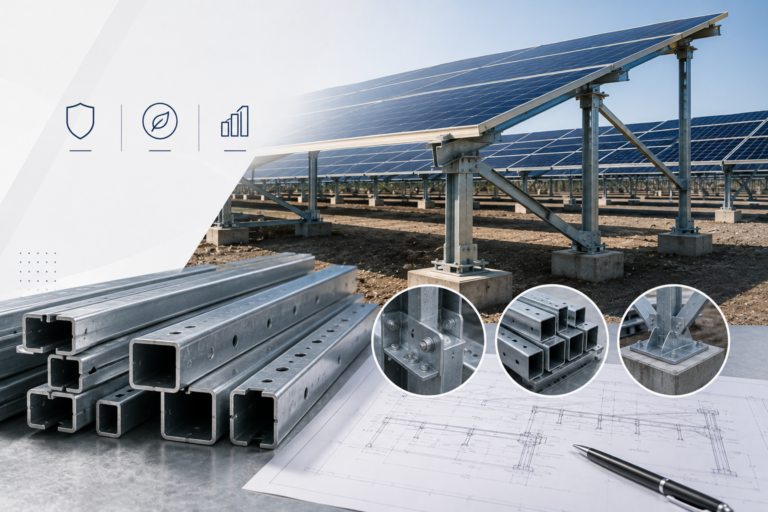
Coating quality is also important for steel structures used in outdoor solar applications. Coating thickness checks can help verify the level of surface protection provided to the steel. Consistent surface protection supports the durability of structural members exposed to outdoor environmental conditions.
Other tests may also be carried out depending on the component and applicable requirements. The ARKION brochure identifies chemical composition testing, tensile testing, dimensional checks, coating thickness testing, hardness testing, bend testing, and material traceability among its quality-related processes. Third-party inspection is also available on request.
Material traceability is particularly useful when multiple structural components are manufactured for a project. Maintaining appropriate identification and documentation can help connect materials and finished components with their relevant production and quality records. This supports better control and accountability throughout the manufacturing process.
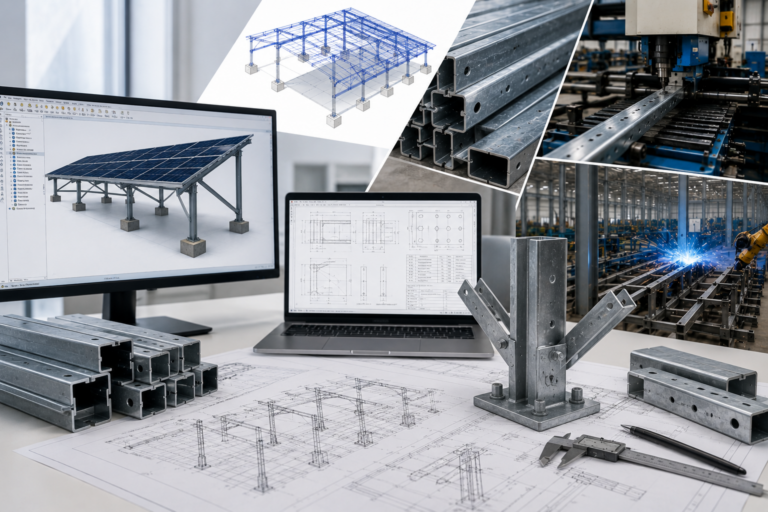
Quality assurance also needs to work closely with engineering and production. Engineering drawings establish the required dimensions and specifications, while manufacturing processes determine how consistently those requirements can be achieved. Quality checks throughout production help identify deviations and maintain consistency before components are packed and dispatched.
At ARKION, quality assurance is treated as an important part of the overall engineering and manufacturing approach. The focus is on maintaining control across production stages while supporting the accuracy, consistency, and reliability of structural components.
Reliable solar infrastructure depends on more than the design of the structure itself. The quality of the materials, manufacturing accuracy, surface protection, inspection processes, and traceability all contribute to the final result. A disciplined approach to quality testing helps ensure that structural steel components are produced with the consistency required for dependable solar applications.