Address
Vadodara, Gujarat
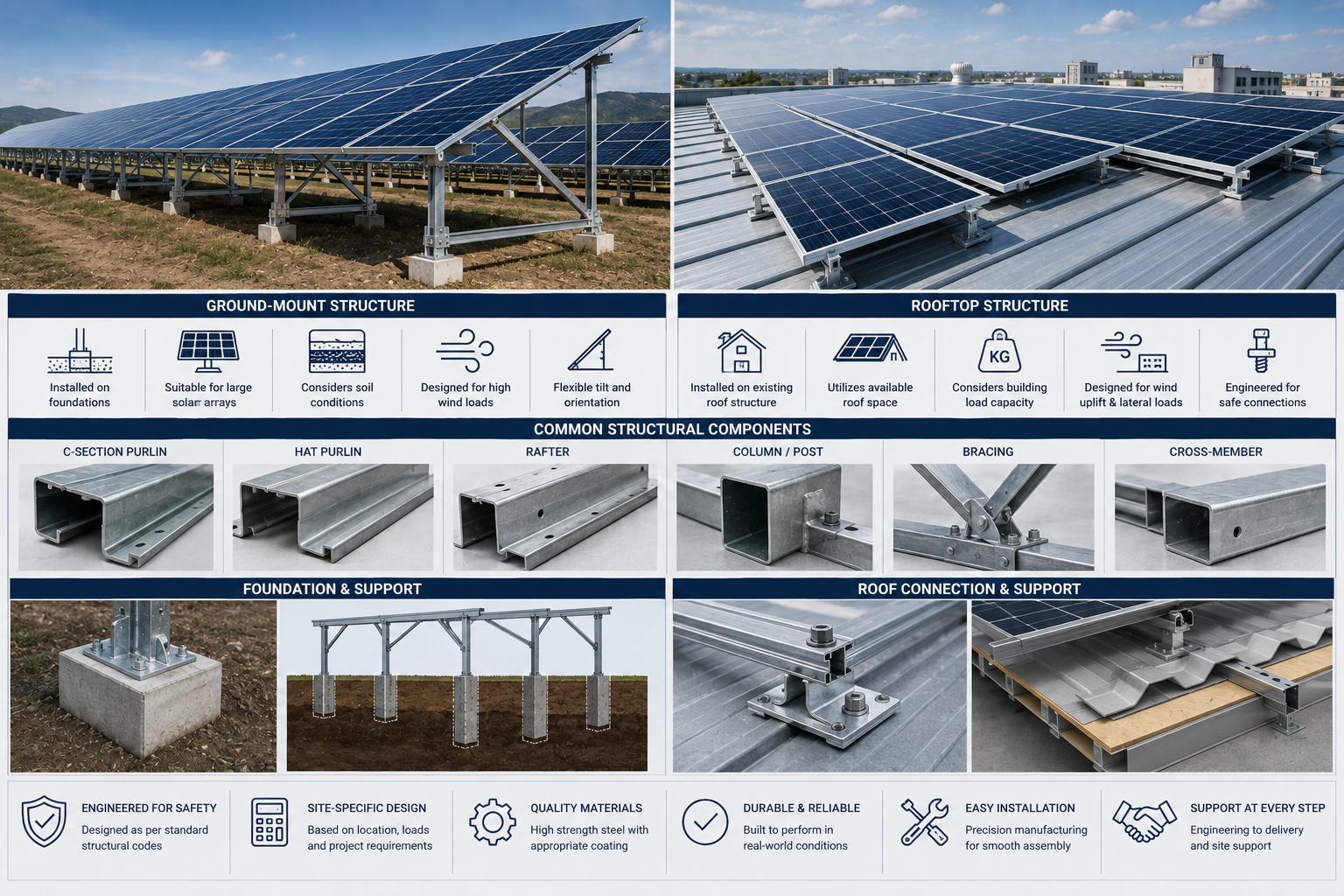
Solar mounting structures are designed according to the application in which they will be installed. Ground-mounted and rooftop solar systems both require strong and reliable structural support, but their design considerations can differ because of the way the structure is supported and the conditions surrounding the installation.
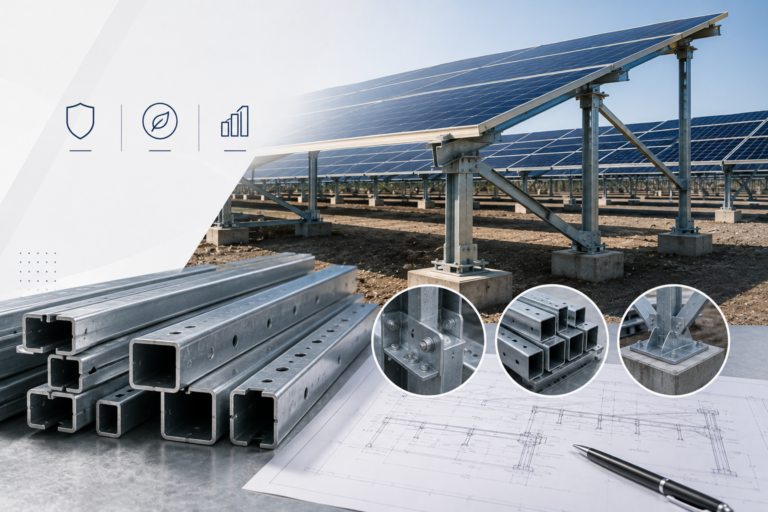
Ground-mount solar structures are installed on foundations and are typically used for larger solar arrays. The structural system includes components such as columns, posts, rafters, purlins, bracing, and other connection hardware. The design needs to consider factors such as soil conditions, foundation requirements, module arrangement, structural loads, wind conditions, tilt angle, and the overall configuration of the solar array.
Rooftop solar structures are installed on existing buildings, which means the supporting arrangement is different from a ground-mounted system. The design needs to account for the existing roof structure, available mounting locations, load considerations, and the way the solar system will be connected or supported. The structural solution must be developed with the specific building and project requirements in mind.
Wind conditions are an important consideration for both applications. Solar modules and their supporting structures can experience uplift and lateral forces, so wind-zone analysis and appropriate structural calculations are required. The final design should take into account the site’s conditions and the applicable structural requirements rather than applying the same configuration to every project.
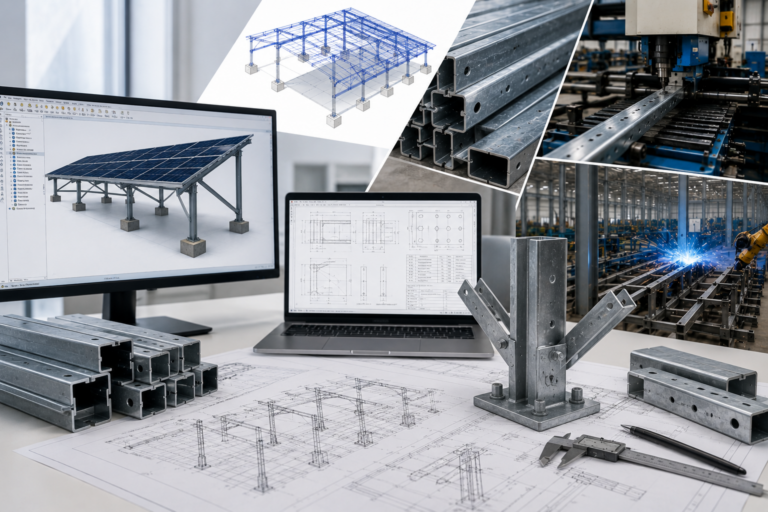
The structural components used in both systems can include C-section purlins, rafters, hat purlins, columns and posts, and bracing and cross-members. The dimensions, thicknesses, spacing, and connection details of these components depend on the requirements of the particular installation.
Ground-mounted structures may require greater attention to foundations and soil conditions because the structural loads are transferred into the ground through columns, posts, and foundation systems. Rooftop structures, on the other hand, require careful consideration of the existing building and how additional loads are transferred through the roof structure.
Tilt angle and module configuration can also influence the structural design. ARKION’s technical information identifies a fixed tilt range of 10°–25°, with custom requirements available where applicable. The final arrangement should be established according to the project’s specific engineering requirements.
Material selection and surface protection are relevant to both applications. Structural steel sections need to be selected according to the expected loading and project requirements, while appropriate surface protection can support long-term durability in outdoor environments. ARKION’s technical information identifies pre-galvanized steel and hot-dip galvanizing as coating options.
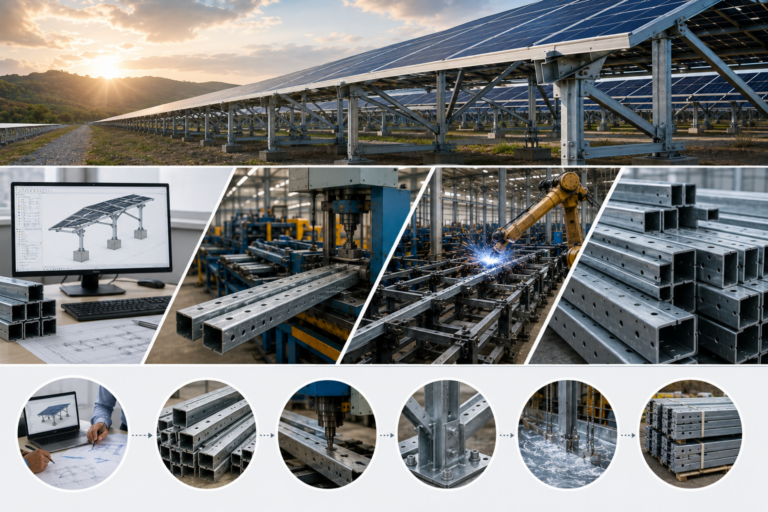
At ARKION, structural solutions are developed around the requirements of the application, with engineering and detailing supported by manufacturing, galvanizing, quality assurance, and site support. This integrated approach helps ensure that the structural system is developed with the practical requirements of the installation in mind.
Whether the application is ground-mounted or rooftop, successful solar structural design depends on understanding the site, the supporting arrangement, the expected loads, the environmental conditions, and the installation requirements. A properly engineered structure provides the foundation needed for a reliable solar installation and supports long-term performance.