Address
Vadodara, Gujarat


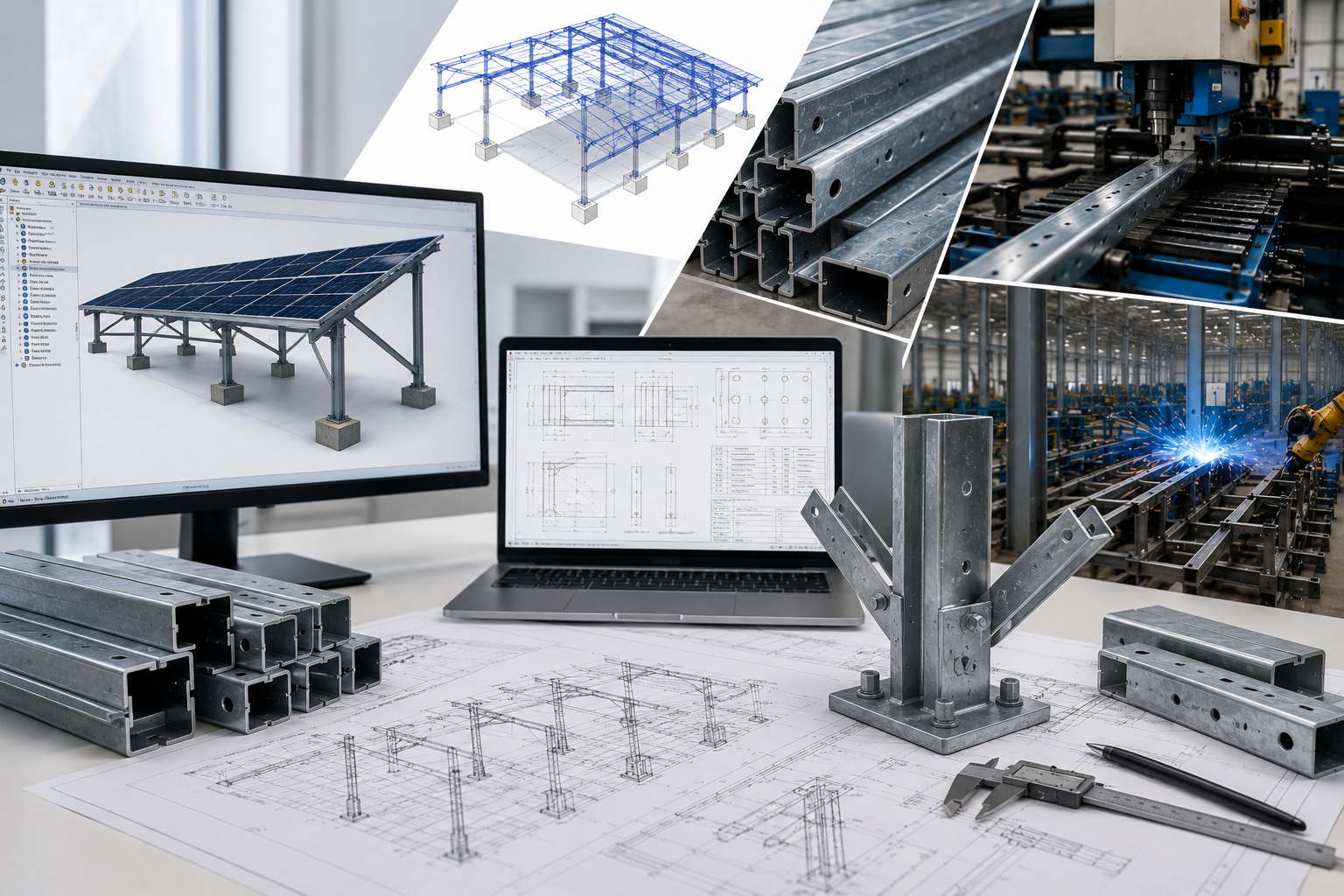
Engineering and detailing form an important link between a structural concept and the final manufactured component. In solar infrastructure, the design needs to consider the requirements of the project and translate them into clear technical information that can be used during fabrication and installation. A well-coordinated engineering process helps connect structural requirements with practical manufacturing.
The engineering stage begins with understanding the application and the conditions in which the structure will be used. Factors such as site requirements, structural loads, wind conditions, module arrangement, material selection, section dimensions, and connection details can influence the final structural configuration. These considerations help establish a practical design suited to the intended application.
Structural detailing then converts the engineering requirements into information that can guide production. Detailed drawings can define member dimensions, connection locations, hole patterns, assembly arrangements, and other manufacturing requirements. Accurate detailing is particularly important when multiple structural components need to work together during installation.
Load calculations and wind-zone analysis are important parts of the engineering process for solar structures. The structural system needs to be evaluated according to the relevant loading and environmental conditions of the project. ARKION’s technical information identifies site-specific wind design based on IS 875, with wind design speeds of up to 180 km/h.
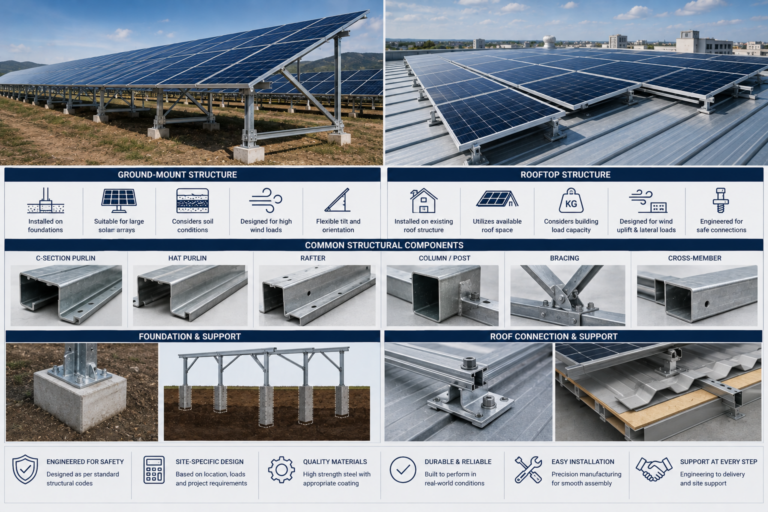
The selection of structural sections is also connected to engineering and detailing. Solar mounting systems can include C-section purlins, rafters, hat purlins, columns and posts, and bracing and cross-members. The dimensions and thicknesses of these components need to be established according to the requirements of the specific structural system rather than being selected independently.
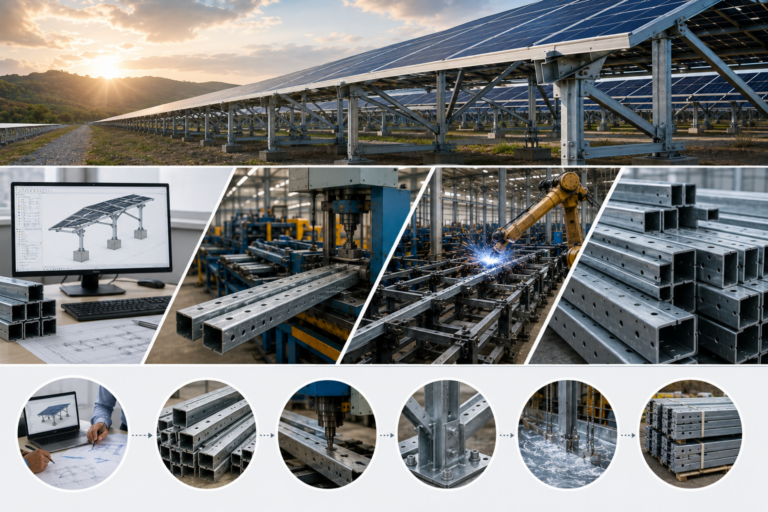
Once the design and detailing are established, the information becomes the basis for manufacturing. Processes such as roll forming, cutting, CNC punching, welding, assembly, and surface protection depend on accurate engineering information. Clear drawings and specifications help production teams understand how individual components need to be manufactured and prepared for final assembly.
Engineering also needs to consider manufacturing practicality. A design may meet a structural requirement, but it should also be practical to produce, transport, handle, and install. Considering these factors during the engineering stage can help create solutions that connect structural performance with real-world project execution.
Quality assurance provides another important connection between engineering and fabrication. Manufactured components can be checked against the dimensions, specifications, and requirements established during engineering. Dimensional inspection, coating checks, material traceability, and other quality processes help maintain consistency between the designed component and the finished product.
At ARKION, Design & Detailing is supported by fabrication, galvanizing, quality assurance, and site support. This integrated approach helps connect the stages from engineering development through manufacturing and project delivery, with the objective of creating practical and reliable structural solutions for solar applications.
Effective engineering and detailing are therefore more than the preparation of drawings. They provide the technical foundation that connects structural requirements, manufacturing processes, quality control, and installation. When these stages work together, the result is a more coordinated approach to developing structural components for dependable solar infrastructure.